-
— TEACHING AND RESEARCH IN PSYCHOLOGY
Degree in Psychology
that transforms evidence of competenceDiscover our Teaching and Research Programmes in Cognitive-Behavioural, Contextual Therapies, Neuropsychology and Neuroscience — featuring scientific rigor, deliberate practice and problem-based learning.
- Evidence-Based Psychology
- Deliberate Practice
- Competency-based training
- Integration between science and practice
A path for each professional milestone.
The decision regarding your vocational training starts at recognition of where you are, of what you have already built and what you wish to develop next.
Build foundations
For Psychology students
Bring closer the graduation of critical evidence appraisal, research and the competencies important for your professional development.
Develop skills
For developmental psychologists
Organise your reasoning, deepen fundamentals and broaden your repertoire through study, exercise and feedback.
Delve deeper and research
For professionals, academics and researchers
Update knowledge, refine skills and strengthen your connection with scientific output.
Uma training session for each professional milestone.
The decision regarding your vocational training starts at recognition of where you are, of what you have already built and what you wish to develop next.
The postgraduate lato sensu programme will be offered in partnership with a higher education institution accredited by the MEC.

RESEARCH PROGRAMME
APPLICATIONS OPEN
Programme aimed at Psychology students and psychologists interested in scientific production. The voluntary researcher joins a research group in one of the areas offered by ITCCN. You learn how to do science in practice: as a team, with supervision and methodological rigor.
RESEARCH PROGRAMME
APPLICATIONS OPEN
Programme aimed at Psychology students and psychologists interested in scientific production. The voluntary researcher joins a research group in one of the areas offered by ITCCN. You learn how to do science in practice: as a team, with supervision and methodological rigor.
RESEARCH PROGRAMME
APPLICATIONS OPEN
Programme aimed at Psychology students and psychologists interested in scientific production. The voluntary researcher joins a research group in one of the areas offered by ITCCN. You learn how to do science in practice: as a team, with supervision and methodological rigor.
RESEARCH PROGRAMME
APPLICATIONS OPEN
Programme aimed at Psychology students and psychologists interested in scientific production. The voluntary researcher joins a research group in one of the areas offered by ITCCN. You learn how to do science in practice: as a team, with supervision and methodological rigor.
RESEARCH PROGRAMME
APPLICATIONS OPEN
Programme aimed at Psychology students and psychologists interested in scientific production. The voluntary researcher joins a research group in one of the areas offered by ITCCN. You learn how to do science in practice: as a team, with supervision and methodological rigor.
RESEARCH PROGRAMME
APPLICATIONS OPEN
Programme aimed at Psychology students and psychologists interested in scientific production. The voluntary researcher joins a research group in one of the areas offered by ITCCN. You learn how to do science in practice: as a team, with supervision and methodological rigor.
RESEARCH PROGRAMME
APPLICATIONS OPEN
Programme aimed at Psychology students and psychologists interested in scientific production. The voluntary researcher joins a research group in one of the areas offered by ITCCN. You learn how to do science in practice: as a team, with supervision and methodological rigor.
RESEARCH PROGRAMME
APPLICATIONS OPEN
Programme aimed at Psychology students and psychologists interested in scientific production. The voluntary researcher joins a research group in one of the areas offered by ITCCN. You learn how to do science in practice: as a team, with supervision and methodological rigor.
RESEARCH PROGRAMME
APPLICATIONS OPEN
Programme aimed at Psychology students and psychologists interested in scientific production. The voluntary researcher joins a research group in one of the areas offered by ITCCN. You learn how to do science in practice: as a team, with supervision and methodological rigor.
Uma training session for each professional milestone.
The decision regarding your vocational training starts at recognition of where you are, of what you have already built and what you wish to develop next.
Add your title text here
Evidence-Based Education It requires more than just delivering content.
At ITCCN, each strategy fulfills a function: investigate real problems, train skills in practice, experience in structured environments, and critically evaluate scientific reading.
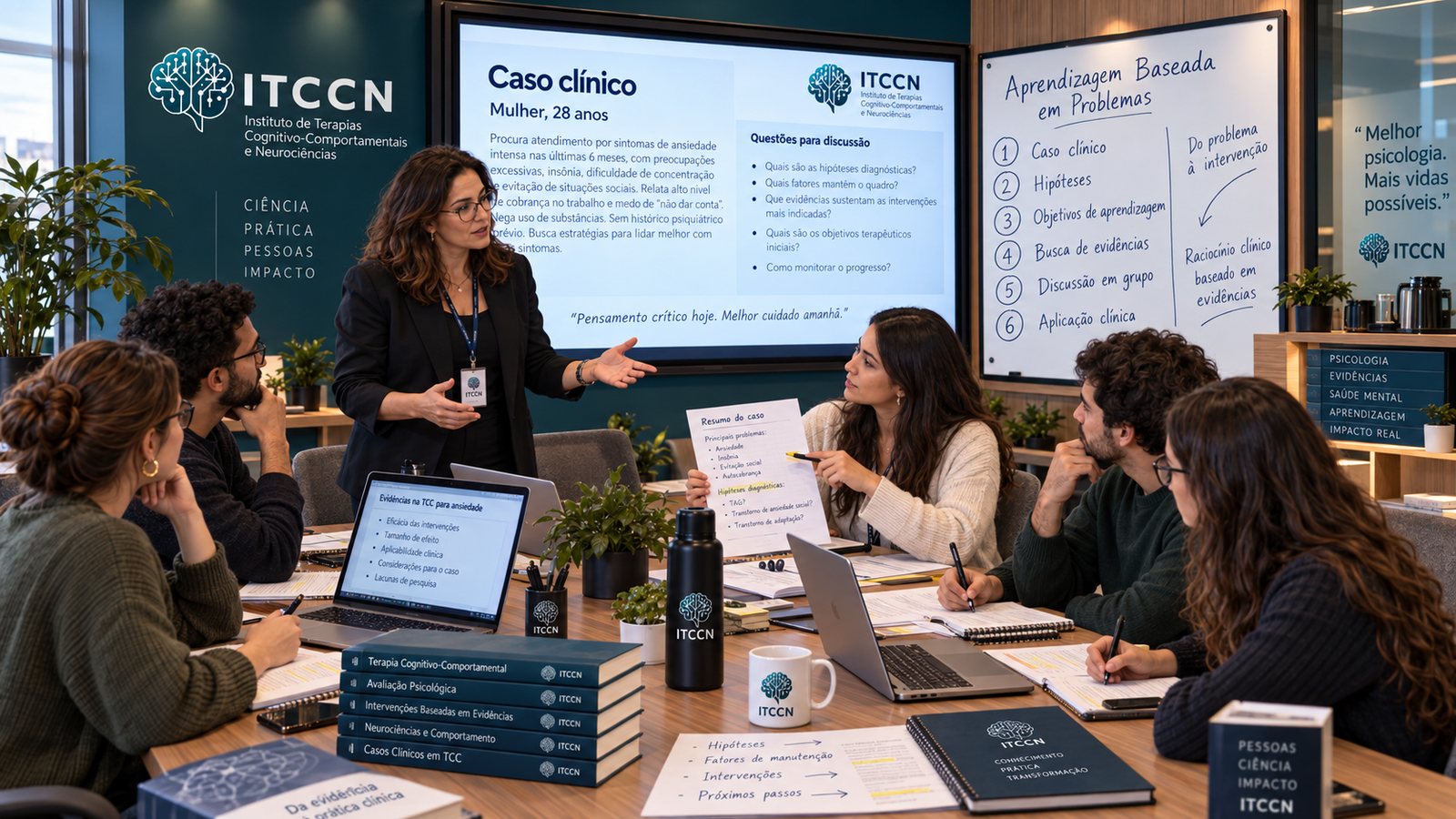
Problem-Based Learning - PBL
Complex problems organize learning. The student identifies what needs to be understood, investigates evidence, and constructs responses with teacher mediation.
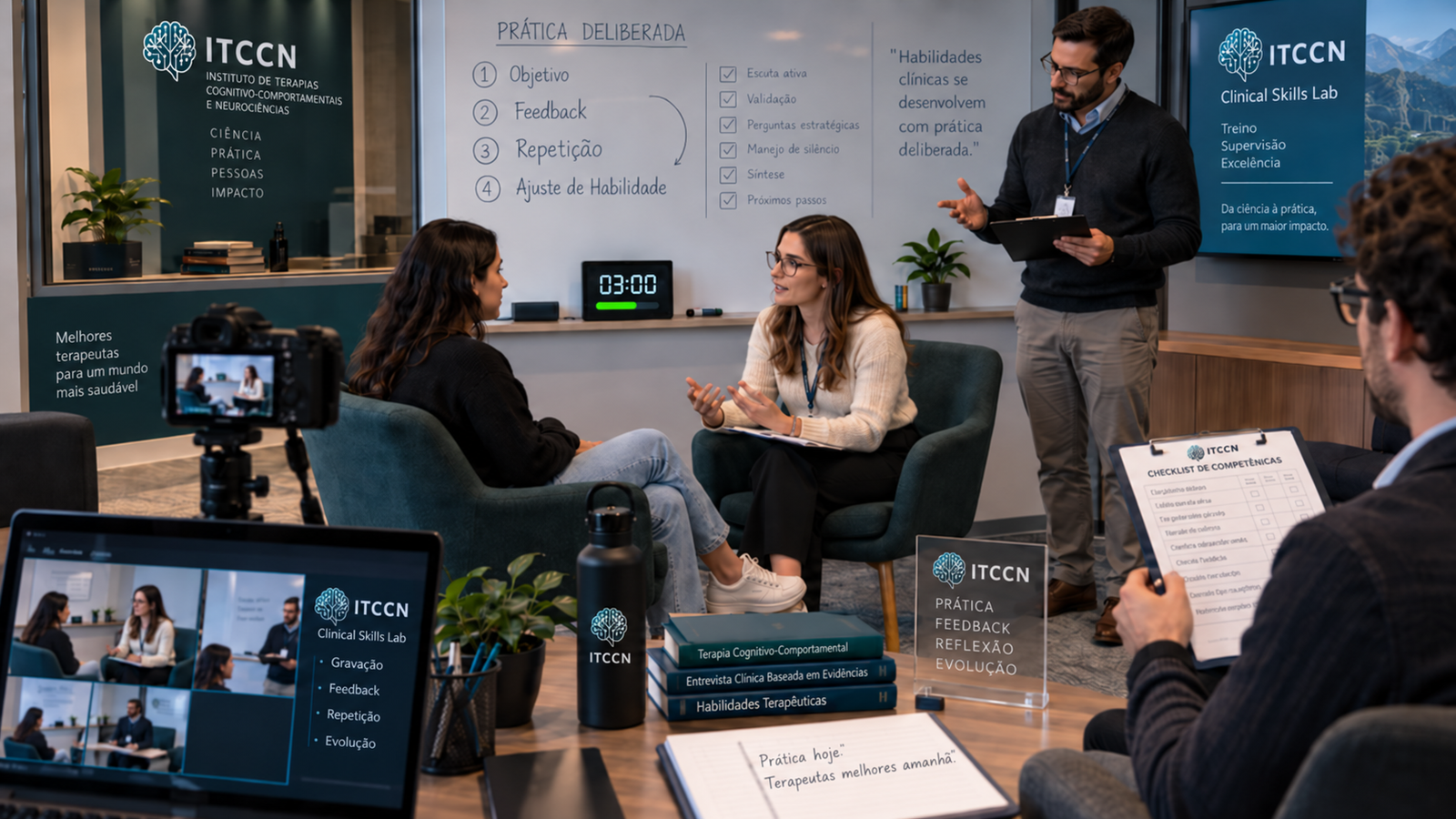
Deliberate Practice
Specific goals, repeated practice, and feedback make improvement more intentional, guiding the next steps of learning.
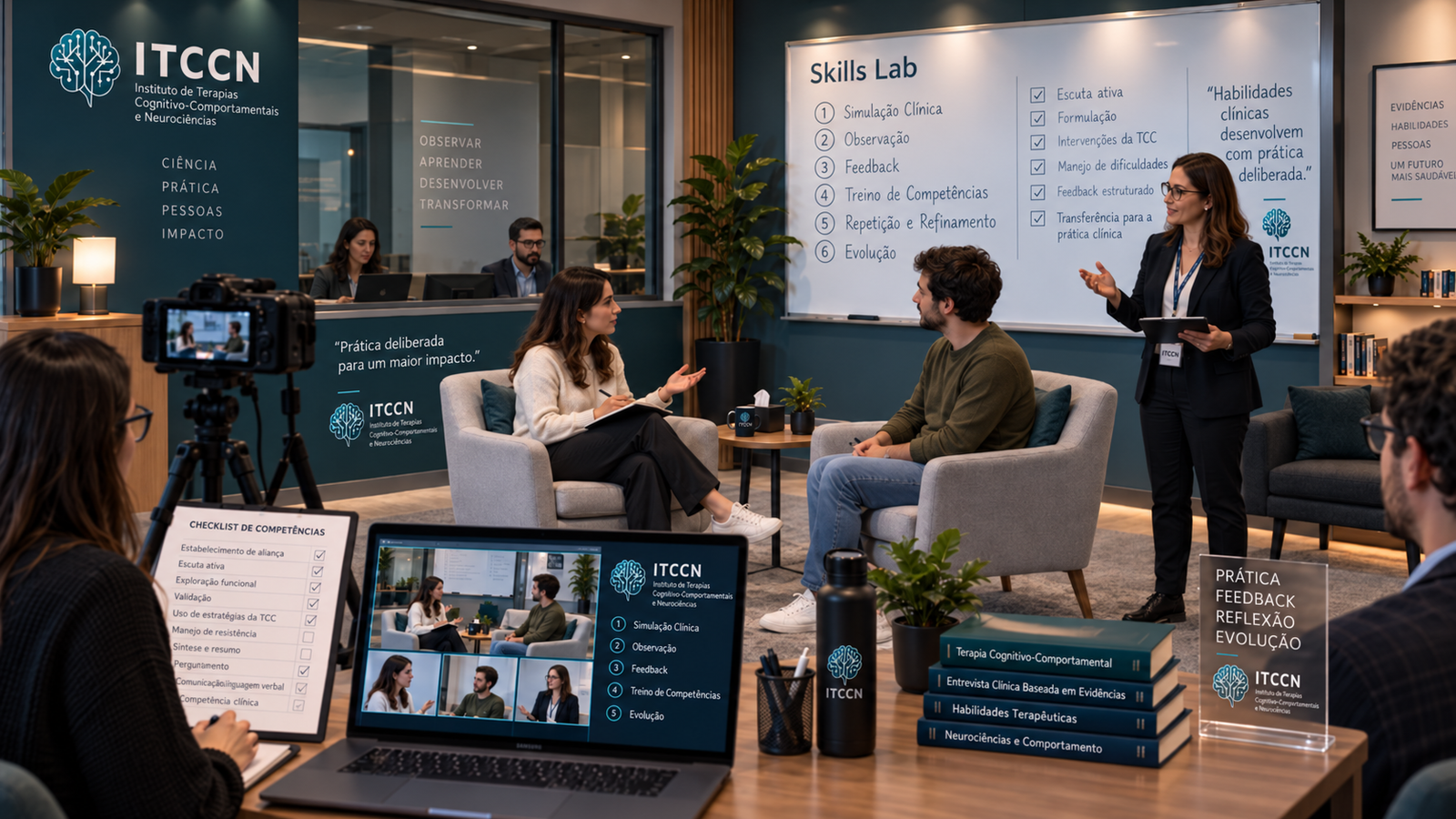
Skills Lab
It combines demonstration, simulation, guided practice, and feedback. It is in this that deliberate practice takes shape in planned activities.
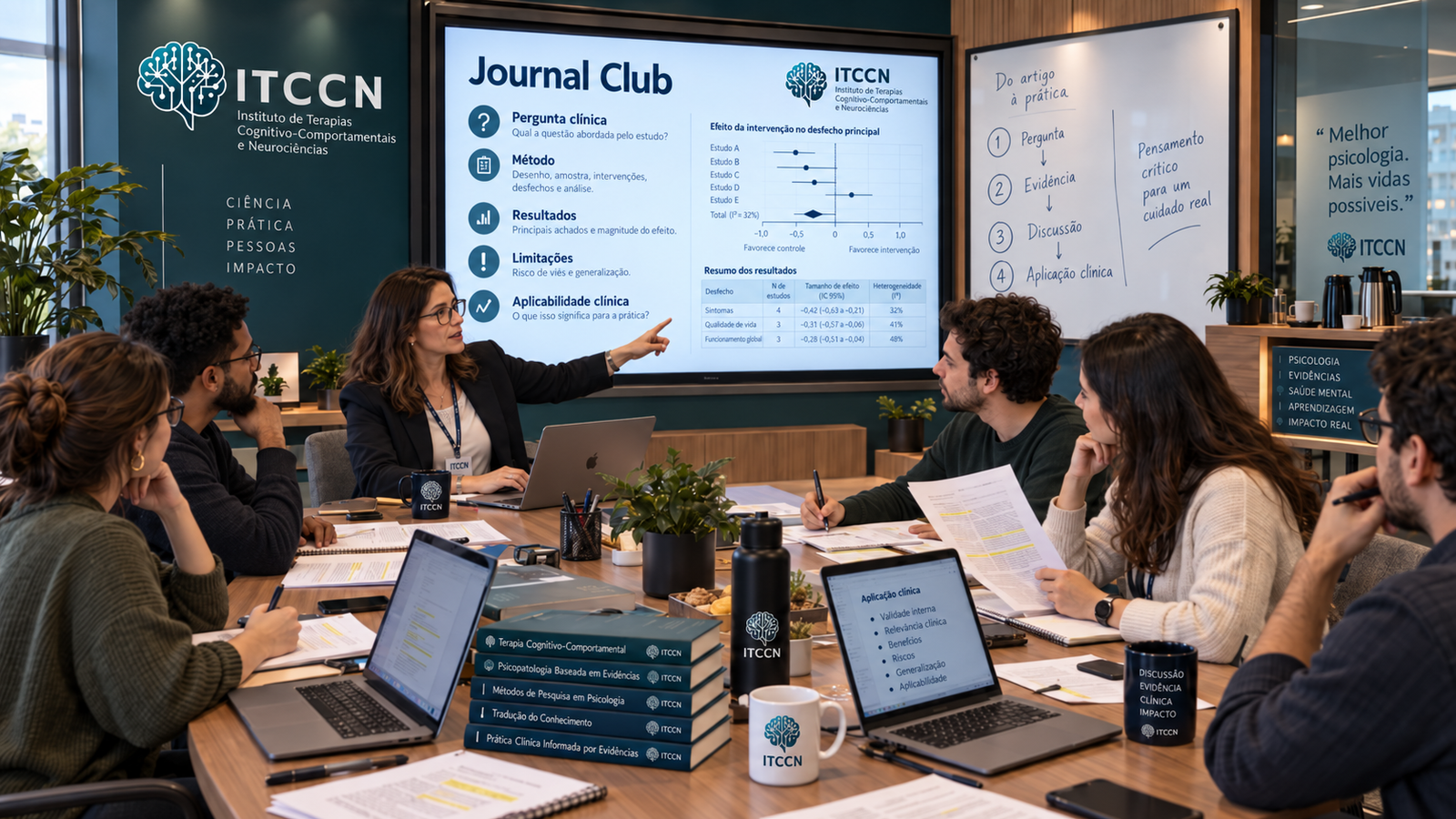
Journal Club
Articles are discussed with criteria for examining methods, results, limitations, and their professional applicability.
The credibility of a vocational training program starts with the person who provides it. teaches.
Meet the teachers and researchers who will accompany you in the ITCCN’s Teaching and Research programs. Our faculty consists of psychologists specializing in their respective fields of knowledge, Recognized for their research and work.

Especially Felipe Fernandes
Lorem ipsum dolor sit amet, consectetur adipiscing elit. Ut elit tellus, luctus nec ullamcorper mattis, pulvinar dapibus leo.
From the skills of critical reading from articles to scientific production.
At ITCCN, research is not a supplement to training; it is the path to it. formulate better questions, evaluate evidence rigorously e produce relevant knowledge.
Our programs seek to bring students and professionals closer to the stages of research by encouraging writing, submission, and scientific publication.
From the question to scientific communication
- Read and critically evaluate scientific literature.
- Transforming relevant problems into questionable questions.
- Plan studies with theoretical, methodological and ethical consistency.
- Analyze results without ignoring uncertainties and limitations.
- Communicate findings with clarity and academic rigor.
- Prepare manuscripts for submission to journals and other scientific channels.
One digital ecosystem scheduled for a Training in Psychology directed by evidence, skills e practical.
More than just bringing together content, the Digital Campus integrates supervised study, problems e simulations, deliberate practice, performance criteria e feedback. Each module makes it clearer what the student is working on.
- Skills-based pathways
- Clinical Skills Lab with case studies and simulations
- Deliberate practice with criteria and feedback
- Progress and projects brought together in a portfolio

Clarity to help you choose
your next step.
I’m still an undergraduate. Which programmes can I take part in?
You can take part in activities aimed at psychology students, such as undergraduate research and training programmes that include undergraduates amongst their participants. These opportunities allow you to complement your studies, gain an insight into research and develop knowledge relevant to your future career. Before making your choice, check the recommended audience, the knowledge required and any requirements regarding the stage of your degree programme.
Can I fit the training in alongside university, work or client appointments?
The first step is to choose a programme that fits in with your available time. As well as the sessions, bear in mind the time needed for reading, practical activities and assessments. Before enrolment, check the timetable, the course format and the attendance requirements. Where there are asynchronous activities or recorded sessions, also check the deadlines for completion and access. This will enable you to plan a study routine that you can maintain throughout the course.
How do I choose the training that best suits my current career stage?
Start by thinking about what you want to develop. A training course can help you explore a specific topic or skill in greater depth; a postgraduate degree offers a broader path to specialisation; supervision focuses on the demands of professional practice; and undergraduate research brings you closer to the world of research. Compare the objectives, content, activities and requirements of each programme with your current needs.
I still feel a bit unsure about seeing patients. How can I develop my clinical skills?
Understanding the theory is one part of this process. Developing clinical skills also involves practising, receiving guidance and reviewing one’s own performance. The ITCCN’s educational approach combines scientific evidence, guided activities, deliberate practice and feedback to develop professional competencies. The aim is to help you recognise what you are already able to do, identify areas for improvement and guide the next steps in your learning.
What is the difference between undergraduate studies, postgraduate studies and research?
A training course usually focuses on a particular topic or skill. Postgraduate programmes have academic entry requirements, and you must have completed your undergraduate degree; the certificate of completion is recognised by the Ministry of Education (MEC) as a specialisation course. A research programme brings you closer to research and scientific output. The details of each programme should be checked individually.
I’m not very familiar with PBE or reading articles. Where should I start?
Start with the basics: asking good questions, finding reliable sources and understanding what conclusions can be drawn from a study. You don’t need to master every method to begin this learning process. Look for introductory activities that match your level of experience and progress gradually. Guided reading and discussion of articles, as proposed by the Journal Club, help you to explore methods, results, limitations and possible implications for practice.
I want to start doing some research. Do I need to have experience or a project ready?
Scientific research is a way of learning how to conduct research. You do not need to have mastered every stage before you begin: turning an interest into a researchable question is part of that learning process. Check the entry requirements to see whether prior experience or an initial research proposal is required. As you familiarise yourself with the programme, take note of how supervision works, how research topics are defined and how research activities are carried out.
Do the programmes offer a certificate? Can I count this towards my extra hours?
The certificate programme and the criteria for obtaining it are specific to each programme. Check the course load, the awarding institution, and the requirements for participation and completion. To use the certificate towards supplementary hours, please check your faculty’s rules in advance: recognition depends on the institution’s assessment and criteria, and is not automatic.
Da evidência à competência.
Qual é o próximo passo na sua formação profissional?